8 Best Egg Layer Breeds Ranked by Real Output

A winter-bright pullet hops to the nest box, and you can hear that brief, proud cackle before the thump: this is the moment you bought feed for. If you’ve been sorting egg-laying chicken breeds by glossy photos alone, real-world output can still surprise you — because climate, body size, molt timing, and temperament push numbers up or down. Here’s what the best layers actually deliver across a year, not just in an ideal catalog week, and how to match a bird to your yard and seasons. By the end, you’ll know which hens lay steadily through chill, which melt in the heat, and how management turns “good layer” into full egg baskets.
1. Hy-Line/ISA/Generic Red Sex-Link Hens: Why Do Hybrids Outlay Most Flocks?

How can a mid-sized red hen seem to conjure an egg practically every day for her first season? Commercial-style hybrids are bred by crossing high-line Leghorns with sturdier brown-egg breeds, stacking genes for early maturity, efficient feed conversion, and a long first lay before the first hard molt. That selection produces 5–6+ eggs per week in year 1 under good light, with a sharp drop after year 2 as the metabolic costs catch up.
In the backyard, they shine if you want volume fast, but plan for the arc: heavy output early, then taper. High production birds need consistent protein (16–18%) and ample calcium, plus shade and water management to blunt summer dips.
2. White Leghorn Types: Are Light Bodies Really the Secret to Sheer Numbers?

Why do these small, sleek white birds keep outpacing heavier breeds on the same scoop of feed? Leghorns carry a lean Mediterranean build and a canal of selection for white-egg production: early point-of-lay (often 18–20 weeks), high ovarian responsiveness to daylight, and a metabolism that channels calories to eggs rather than mass. Their thin combs help dump heat, which supports laying through warm months.
Expect 5–6 eggs per week in year 1 and strong year-2 persistence compared to many hybrids. They’re light on feed, quick on their feet, and can be flighty; secure fencing and routine handling help them settle without sacrificing that stellar output.
3. Plymouth Rock (Barred and Other Varieties): Can This Dual-Purpose Breed Keep Up?

If a hen is built for both meat and eggs, does she still fill cartons? Barred Rocks were standardized as dual-purpose birds, so some feed goes to frame and insulation. Even so, they deliver 4–5 brown eggs per week in season thanks to steady temperaments, good foraging, and resilience across climates.
The trade-off is predictable: not top-of-chart daily numbers, but durable multi-year laying without dramatic crashes. In mixed flocks, their calm reduces social stress, which indirectly sustains laying when pecking orders shift. Barred Rocks were one of the most common farmyard breeds in America through the early 1900s, valued specifically for this steady, unglamorous consistency long before hybrid layers existed at all.
4. Australorp: Is the “World Record” Bird Still a Backyard Workhorse?

Does the legend of a hen laying hundreds of eggs in a year mean anything for your coop? The old record came from a particular line under controlled conditions, but the trait behind it — efficient conversion and a steady endocrine rhythm — still shows. Australorps commonly produce 5 eggs per week in year 1, with better-than-average winter continuity under adequate light and nutrition.
Black plumage can load heat in summer; provide deep shade and airflow to protect output. Their gentle nature keeps them productive during flock reshuffles, where nervous breeds sometimes pause.
5. Rhode Island Red/Production Red: Are “Reds” Just Hype or Real Producers?

What’s the difference between heritage Rhode Islands and the ubiquitous “production red” at the feed store? Heritage RIRs are heavier-bodied with balanced traits, while production reds are selected for higher sustained output. In practical terms, heritage birds average 4–5 eggs per week with good longevity; production types push more eggs in years 1–2, then taper faster.
Both handle a range of climates. Watch for bullying in cramped runs; assertive hens can surge in the pecking order and suppress timid layers, trimming your overall basket more than any single bird’s genetics.
6. Easter Egger/Blue-Layer Mixes: Can Color and Consistency Coexist?

If you want blue and green shells, do you have to give up on output? Not necessarily. “Easter Egger” is a catchall for Ameraucana-type mixes that carry the blue egg gene (oocyan). Output rides the specific cross, but many lay 4–5 eggs per week, with shell color unrelated to quantity once the laying machinery is set.
Variability is the deal: some will be rock stars; some take winter breaks without added light. Choose from reputable lines known for production and keep a few more birds than your target number of brown-egg layers to smooth the averages. True Ameraucanas carry the same blue-egg gene under a recognized breed standard, while Easter Eggers are simply unstandardized crosses carrying it — worth knowing if you ever want a predictable, breed-true flock rather than a colorful grab bag.
7. Sussex (Especially Light Sussex): Does This Curious Foraging Breed Pay You in Eggs?

Does a bird that patrols the yard all day actually lay more? Free-ranging Sussex convert insects and greens into protein and micronutrients, which can support 4–5 eggs per week in season while trimming feed costs. Their broad bodies and calm temperaments suit cool climates; heavy molts can slow them for 6–12 weeks as resources go to feathers.
Foragers need safe space to work. If ranging isn’t possible, enrich runs with deep litter and scatter feeding so the behavioral engine that makes Sussex thrive still turns — boredom stalls laying as reliably as a cold snap.
8. Marans and Welsummer: Do Dark Shells Mean Fewer Eggs?
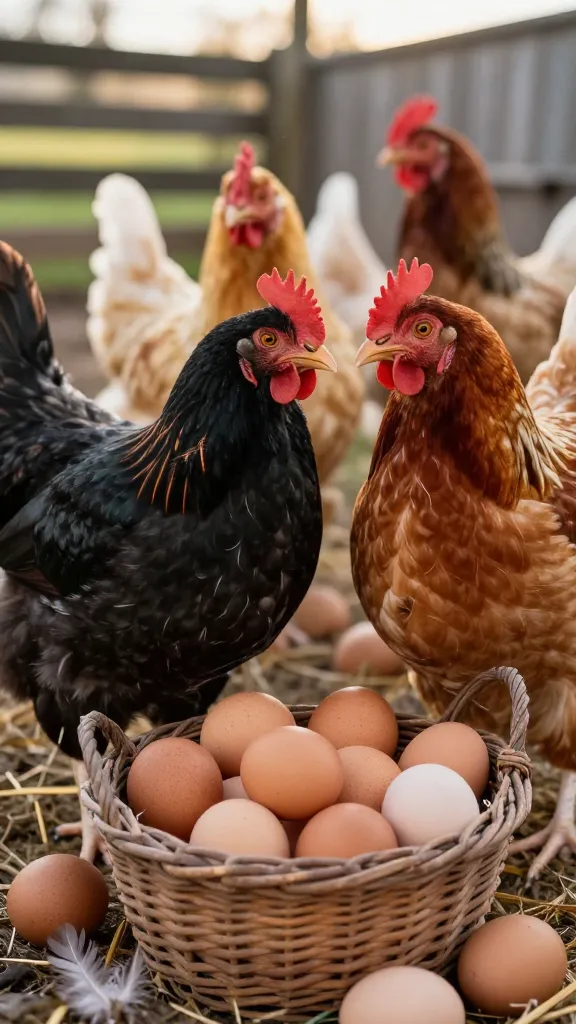
Is the chocolate egg simply rarer because the hen makes fewer of them? Dark brown shells come from heavier protoporphyrin layers in the shell gland late in formation, which can slightly slow the cycle. Many Marans and Welsummers lay 3–4 eggs per week, with shell color often richest early in the season and lightening as the gland’s pigment stores ebb between molts.
If you’re chasing basket aesthetics, pair a few dark-egg hens with higher-output birds so color doesn’t cost you breakfast. Keep stress low during pigment application — rough handling late in the day can translate into mottling or paler shells. French Cuckoo Marans in particular built a real reputation around egg-shade competitions, where breeders are judged partly on how dark and consistent the shell color runs across an entire clutch, not just a single standout egg.
Frequently Asked Questions
How did you rank egg-laying chicken breeds by “real output” instead of hype?
I weighted first- and second-year lay rates, climate resilience, molt downtime (6–12 weeks), and how temperaments handle stressors like heat waves and pecking-order shifts. A bird that keeps 4–5 eggs per week through spring and fall beats one that spikes briefly and crashes at the first hard molt.
What’s a realistic number of eggs per week from the best-laying breeds?
Top hybrids and White Leghorns commonly give 5–6 eggs per week in year 1 under 14–16 hours of light, balanced nutrition, and good housing. By year 2, expect a modest drop; by year 3, plan for further decline and value steadiness over peaks.
Do colored eggs mean better nutrition or just prettier cartons?
Shell color doesn’t change the egg’s internal nutrition; the differences are almost entirely in the shell and cuticle pigments. Yolk color and nutrient density track diet — pasture access, leafy greens, and balanced feed — not shell shade.
Can I keep dual-purpose hens and still meet a family’s egg needs?
Yes. A small group of steady dual-purpose birds like Plymouth Rocks or Sussex can cover 4–5 eggs per week each in season. Combine them with 1–2 high-output hybrids if you want insurance for winter dips or frequent baking.
Why did my strong layers slow down after a heat wave?
Heat suppresses appetite and disrupts the hypothalamic-pituitary-ovarian axis, delaying ovulation. Provide deep shade, cool water with extra stations, evaporative airflow, and high-density feed; once body temperature and intake normalize, lay typically rebounds within 1–2 weeks.
Choose the Bird for Your Seasons, Not Just the Shell Color
You’ll start noticing who stays on the nest chart when the first cold front hits, who eats well in heat, and whose molt pauses are brief versus epic. That’s the real picture of output — physiology, temperament, and your yard’s microclimate working together, egg by egg.
— keep watching. They’re never boring.