Chicken Math Explained (The Joke That’s True)
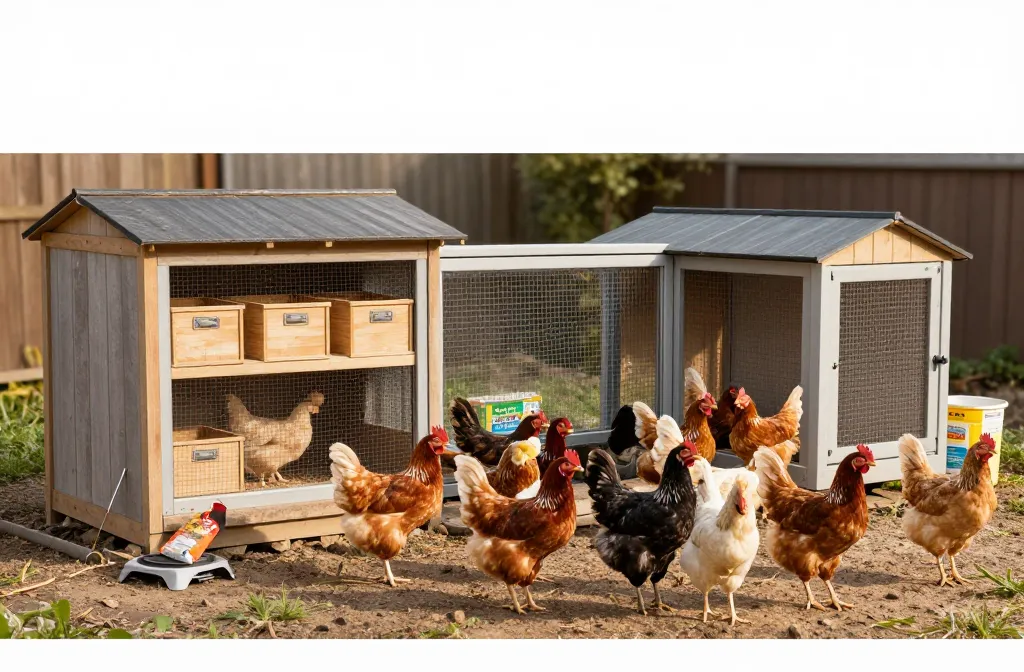
How Chicken Math Starts (And What I Thought Would Happen)
Chicken Math begins with “just a few extras” and ends with a bigger coop. Buy 3 get-1-free deals, straight-run surprises, and clearance chicks add up fast — and by fall you’re building a second run instead of enjoying the first one.
I learned Chicken Math in the lawn-and-garden aisle, staring at a bin of pullets that were “buy 3, get 1 free,” doing the kind of math that ends with a bigger coop. Chicken Math Explained (The Joke That’s True) is exactly that: the headcount that keeps creeping up, and how to keep your budget and setup from getting steamrolled. I started with 4 chicks in a stock tank and a $0 Pinterest coop board; by fall I was building a second run and googling “how many nest boxes for 12 hens” because I accidentally had 12. I’m going to show you what it cost me, where the creep happens, and the guardrails I use now so you don’t rebuild your weekend and your wallet every spring.
I swore I’d keep it to 4 hens because my yard is small and my Saturdays are smaller. Then I walked past a straight-run bin in April and told myself I’d “just brood 2 extras and rehome them.” I paid $18 each for 4 sexed pullets and $4 each for 2 “mystery” chicks, brought home 6 peeping marshmallows and a heat plate I wasn’t planning to buy ($52 used from a neighbor). By week 3, the two “mystery” chicks sorted themselves into one rooster and one very fast pullet, and I learned rehoming isn’t instant unless you price at $0 and are fine with a long drive.
What I expected: 4 hens, 4 eggs most days, a cute coop. What happened: 5 hens, 1 rooster I had to place, and a brooder that needed upgrading from a stock tank ($0) to a 2×4 wire crate with hardware cloth sides ($28 in cloth + $6 zip ties) when they outgrew the tank in 2 weeks. None of this was the end of the world; it was just the first nudge of “since we’re here anyway…” that is the whole shape of Chicken Math.
Where the Numbers Creep (Feed, Space, and the Second Trip to the Store)
Feed costs climb with spillage, space shrinks with every extra bird, and “purpose” creeps in when you add meat birds. Six chicks eat twice as much as four in the same time because crowded brooders waste feed — and one June clearance on Cornish crosses turns your quiet layer setup into a second brooder with a hard deadline.
The first headfake is feed. A 50-lb bag of starter runs $20–$28 in my area. Four chicks finish roughly 1 bag every 3–4 weeks. Six chicks hit 2 bags in the same time because spillage is real in a crowded brooder. I switched to a hanging feeder at $16 after sweeping up a quarter-bag off the garage floor twice. That tiny purchase paid for itself in a month, but it was also example #2 of “spend to save” that I had not budgeted.
Space creeps next. I built a small A-frame with 16 sq ft of floor because 4 hens “only need 10–12 sq ft of run space each” is a line you see a lot, but what it means in practice is 4 sq ft per bird in the coop and 8–10 sq ft in the run minimum. Add two birds and you aren’t “a little tight,” you’re short a weekend project. My fix: I added 32 sq ft of run with 2 cattle panels ($28 each) and a 25-foot roll of half-inch hardware cloth ($45), zip-tied into an arch that I skinned in garden plastic for rain. It wasn’t pretty; it worked. I wish I had just built the bigger footprint once.
The last creep is “purpose.” I told myself I’d try meat birds “later” and then a June clearance on Cornish crosses showed up at $1.50 each. I bought 8 because apparently I love chores. That choice turned my quiet layer setup into a second brooder, a second waterer ($12 horizontal nipple bucket) and a hard deadline to process at 8–10 weeks. I had no regrets, but I also had $60 of unplanned birds and $30–$50 in extra feed inside of 2 months.
The Real Costs I Logged When My Flock Doubled
Adding birds means adding square feet, feed, and a weekend of construction. My spring of “just two extras” cost $173 in unplanned purchases — brooder expansion, run addition, nest boxes, and rehoming fuel — plus hours of Tuesday nights and Sundays I hadn’t planned to spend with a staple gun.
- Extra brooder expansion — $34 (hardware cloth + zip ties) + 2 hours on a Tuesday night.
- Larger feeder + second waterer — $16 + $12. The cheap white trough spilled feed; the hanging style slowed waste by about 25% in my garage-scale reality.
- Run addition — $101 (2 cattle panels at $28 each, hardware cloth $45). Stakes and twine I had. If you buy new stakes, add $12–$20.
- Nest box materials — $18 (scrap plywood + a fresh box of exterior screws). I went from 1 to 3 boxes because 5 hens and one box was a conga line.
- Rehoming rooster fuel — $14 in gas for the handoff an hour away. Not a budget line item anyone warns you about; it is real.
Those are my numbers from a single spring. Prices swing by region and year, but the shape doesn’t: add birds, add square feet and feed, then add a weekend because you’re out of roost space again.
My Guardrails So I Don’t Keep Building on Sundays
Set a hard headcount tied to your coop size, pre-commit a rehoming plan, and stop buying “free” chicks. My rule: max 6 layers on my current footprint (24 sq ft coop + 64 sq ft run), with a $120 expansion fund by March for the unavoidable surprise trip.
I keep a headcount rule on a sticky note inside the coop door: max 6 layers on my current footprint, which is 24 sq ft coop + 64 sq ft run. If I break it, I commit to expanding the run by 16 sq ft per 2 birds before I bring them home. I also keep a feed-and-bedding line in my budget at $30–$40/month for 6 layers. If I want to add 2 pullets in spring, I bump that line to $45–$55 and set $120 aside by March for the unavoidable “surprise” trip (hardware cloth, hinges, or a heat plate because a cold snap will happen).
I stopped buying “free” chicks. That deal is never free. If I can’t sex them confidently and I’m over my limit, I say no and go admire someone else’s brooder. I also pre-commit my rehoming plan before I buy: one local farm swap, one neighbor who takes roosters, or I don’t bring home a bird I can’t keep. It removes the “I’ll figure it out later” that inflated my numbers the first year.
Chicken Math, Coop Space, and When to Say No
Your coop is your speed governor: 4 sq ft per bird inside, 8–10 sq ft in the run, 8–12 inches of roost per bird. If your coop is 24 sq ft, 6 hens is the honest ceiling — stretching to 8 means pecking starts the first rainy week and you’re out at 10 p.m. stapling more hardware cloth.
The coop is your speed governor. Plan 4 sq ft per bird inside the coop if you have winter weather and 8–10 sq ft per bird in the run you actually use, not the yard you sometimes free-range. Roosts want 8–12 inches per bird; more if you have heavy breeds that kick for space. According to poultry.extension.org and Cornell Cooperative Extension, laying hens need a minimum of 3–4 square feet indoors and 8–10 square feet outdoors — and that’s for well-managed flocks, not cramped ones. If your current coop is 24 sq ft, 6 hens is the honest ceiling unless you’re adding a covered run immediately. I tried to stretch to 8 on the same footprint “just for summer” and I was out here at 10 p.m. stapling more hardware cloth because pecking started the first rainy week.
If the math only works when it’s sunny, it doesn’t work. I keep one empty nest box and one extra linear foot of roost as my “if I add two, I’m still fine” buffer. When those are spoken for on paper, I’m done buying birds until I build.
Egg Math: The Part That Tricks You
Egg math is why we all get into trouble: more hens seems like more eggs, until molt hits and daylight drops. Six pullets at peak lay give you 4–6 eggs/day in summer, but at 15–18 months when molt hits and daylight drops below 14 hours, you’re getting 1–2 eggs/day and thinking “I should add fall pullets!” — that’s the siren song.
Egg math is why we all get into trouble. Six pullets at point of lay can give you 4–6 eggs/day in peak season, so you tell yourself more hens equals more breakfasts. Then molt hits at 15–18 months, daylight drops below 14 hours, and suddenly you’re getting 1–2 eggs/day and thinking “I should add fall pullets!” That’s the siren song. According to University of Minnesota Extension, hens begin laying at around six months of age and can continue for five to 10 years, with peak production occurring in the first two years — they lay roughly six eggs each week, but production drops each year when the hens molt and as daylight hours are lost.
Here’s what worked: I stagger starts. I buy 2 pullets each spring or late summer so I always have one group laying through winter while the older birds molt. That keeps my winter eggs at 2–4/day with 6–8 total hens, which is plenty for a household that eats a dozen a week and gifts a dozen. Chasing summer peak with more birds just raised my feed bill by $10–$15/month without changing winter reality.
When Chicken Math Is Worth It (And When It Isn’t)
Adding birds made sense when I wanted a stable winter supply and had materials on hand. It did not make sense when I added a different breed “just to see” and had to split the flock because the bantams were getting bullied — that experiment cost $45 in extra fencing and three hours I won’t get back.
Adding birds made sense when I wanted a stable winter supply and I had materials on hand to expand the run in an afternoon. It did not make sense when I added a different breed “just to see” and had to split the flock because the bantams were getting bullied; that experiment cost $45 in extra fencing and three hours of my life I won’t get back. I still try new things; I just price the split before I say yes.
The line that saves me is simple: if it needs the “for now” excuse, I don’t do it. “For now” is Chicken Math’s favorite cousin. It ate my May once and I keep that receipt taped to my feed bin.
Chicken Math and the Coop: What I’d Build First If I Could Rewind
If I were starting again, I’d build for 6 layers immediately: 24 sq ft coop, 64 sq ft covered run, 3 nest boxes, and predator-proofing with half-inch hardware cloth. I’d set $200 aside for expansion parts because I will use them — hinges, screws, a second pop door latch, cattle panels — and buy a horizontal nipple waterer from the start to save 20 minutes/week of scrubbing.
If I were starting again, I’d build for 6 layers immediately even if I only bought 4. That is 24 sq ft coop + 64 sq ft covered run, 3 nest boxes, 8–10 linear feet of roost, and predator-proofing with half-inch hardware cloth, 25–50 feet ($45–$85 depending on length). I’d set $200 aside for “expansion parts” because I will use them: hinges ($8–$12), exterior screws ($9–$15), a second pop door latch ($6–$10), 2 cattle panels ($56 total here). I’d also buy a horizontal nipple waterer ($18–$25) from the start; it saved me 20 minutes/week of scrubbing slimy pans and kept the run drier when I finally switched.
I tried to be clever with chicken wire to save $34 the very first spring. A raccoon taught me in one night why that was dumb. Hardware cloth is not optional. It is the one line I will not trim, even when I’m counting quarters at checkout.
Frequently Asked Questions
What is Chicken Math and why does my flock keep growing?
It’s the drift from “I only want 4” to “well, 6 fits” powered by deals, straight-run surprises, and chasing egg numbers. If you don’t set a hard cap tied to your coop size (4 sq ft per bird inside, 8–10 sq ft in the run), the purchases feel small and the total sneaks up by $100–$200 in a season.
How do I stop Chicken Math from wrecking my chicken coop plan?
Build for your real ceiling now. If your chicken coop is 24 sq ft, cap yourself at 6 hens unless you add 16 sq ft of run for each extra pair. Keep $100–$200 earmarked for expansion parts so you’re choosing, not reacting on a Sunday afternoon.
Is Chicken Math “worth it” if I just want eggs for my family?
For a household that eats 1–2 dozen/week, 6–8 layers is the sweet spot. Past that, feed climbs by $5–$10/month per 2 hens while winter egg numbers don’t move much. If you love sharing eggs and have space, go for it; if you’re counting dollars, hold the line at 6.
How much feed will 6 hens eat each month?
Expect 1.5–2 bags of 50-lb layer feed/month for 6 adult hens, so roughly $30–$56 depending on your local price ($20–$28/bag). Add $5–$10 if you spoil them with scratch or have wild birds stealing from open feeders.
Do I need more nest boxes if Chicken Math happens to me?
Plan 1 box per 3–4 hens. At 6 hens, 2 boxes works; at 8, go to 3. I added a third for $18 in scraps and screws after finding two cracked eggs and a traffic jam at 9 a.m. on a rainy Tuesday.
Quick Comparison: Chicken Math Costs
| Item | My Cost | What It Bought Me | Would I Do It Again? |
| Extra brooder expansion | $34 | Hardware cloth + zip ties for 2×4 wire crate | Yes — but I’d build bigger the first time |
| Hanging feeder | $16 | 25% less feed waste vs. white trough | Absolutely — paid for itself in a month |
| Second waterer | $12 | Horizontal nipple bucket for meat birds | Yes — but I’d plan for it upfront |
| Run addition (32 sq ft) | $101 | 2 cattle panels + hardware cloth arch | Yes — but I wish I’d built bigger once |
| Nest boxes (2 extra) | $18 | Scrap plywood + screws for 3 total boxes | Yes — 5 hens and 1 box was a conga line |
| Rehoming fuel | $14 | Gas for rooster handoff an hour away | No — I’d pre-commit a rehoming plan |
| Extra fencing (bantam split) | $45 | Separate run for bullied bantams | No — I’d price the split before buying |
| Heat plate (used) | $52 | Brooder warmth for 6 chicks | Yes — but I’d budget for it upfront |
You Can Want More and Still Spend Smart
If you’re eyeing that extra pair of pullets, measure your coop and write the real square feet on a sticky note before you get in the car. Price a 25-foot roll of hardware cloth and 2 hinges, then decide. If you still want them after the math, you’ll be set up, not scrambling in the dark with a staple gun. For detailed comparisons of coop designs that scale with your flock, the coop designs comparison walks through pros and cons with pictures. If you’re working with salvaged materials to stretch your budget, the homemade coop ideas guide shows how to build from what’s already in the garage. And when you’re ready to think about predator pressure on your expanded setup, the predator-proofing checklist covers every weak point you might have missed.
— ask me how I know.