9 Chicken Coop Sign Ideas — Names, Fonts, and What Reads From the Road
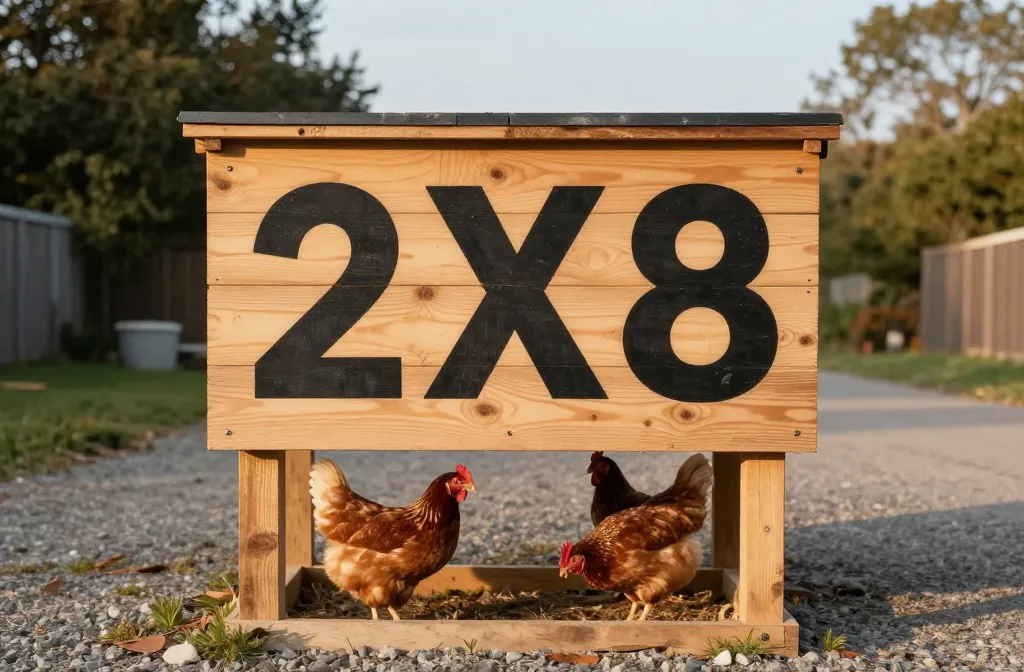
Chicken coop sign ideas look adorable online, but I learned fast that what photographs cute doesn’t always read from 40 feet while you’re carrying a feed bag. I painted my first sign on a fence board for $0 in leftover paint, and my neighbor called to ask if I’d named the coop “The Blurr.” By the end of this, you’ll have 9 working ideas, the fonts and sizes that actually read, and what each one cost me or would cost you at a normal store. I’ll show you what survived rain, sun, and a winter that snapped my first stake in two. You’ll finish with a name you love and a sign you can spot from the road without squinting.
1. 2×8 Cedar Plank, Big Block Letters: The Coop Workhorse

I wanted a sign you could read from the street while I was dragging a hose, not a museum plaque. The first board I tried was a scrap pine slat that cupped so hard by month 2 you could eat cereal out of it. The fix was a 2×8 cedar plank, sanded and sealed, with block letters cut from adhesive vinyl letters ($7–$12 per set) and a quart of exterior paint ($18–$24, I used 1/3 of it). All in, the board plus screws ran me about $24–$36, and it’s still flat after 18 months.
The catch is thickness and weight: a 2×8 is overkill for a flimsy post. I mounted it with 2.5-inch exterior screws into the coop framing, not the fascia, and sealed the end grain with exterior spar urethane. Rain beaded; the letters stayed crisp.
Make it yours: use white letters on a dark background for max contrast. If your coop is shaded, yellow on black reads best at a glance; I tested red and lost it at 25 feet.
2. Hanging Aluminum Panel, Rattle-Can Stencil: Reads in Rain
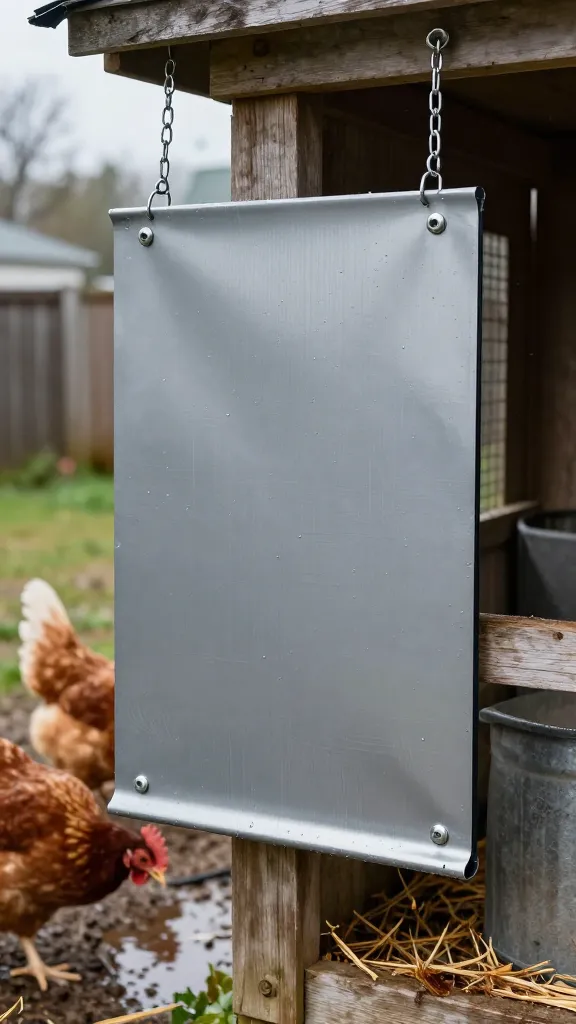
I tried a cute chalkboard for $9 and discovered chalk paste turns to bird-foot graffiti in one drizzle. Aluminum flashing changed the game. A 12×24-inch aluminum sheet runs $10–$16, two stainless eye bolts and chain add $6–$10, and a can of self-etching primer plus enamel spray is another $12–$18. I cut 6-inch stencil letters from poster board and hit them with two light passes.
It swings in the wind, so I added a bottom stabilizer—just a small screw eye into the wall and a short chain ($3) to stop the clacking. After 11 months, the black background is still black, and the white block letters are clean. If you skip primer, it scratches fast; my first try looked like a raccoon autographed it within a week.
Make it yours: magnetic letters on primed steel let you swap the coop name seasonally. Budget $8–$12 for a small set and keep them high enough that curious beaks can’t tug.
3. Painted Plywood Cutout of a Hen: Cute, But Size It Right

I traced a hen silhouette on 1/2-inch exterior plywood and got carried away with the jigsaw. Materials cost me $28–$40 including paint and a cheap brush, and it looked fantastic on the wall. From the road? It read as “farm object,” not a name, until I added a banner belly with 5-inch block letters.
The weak link is edge sealing. My first cutout drank water along the curves and delaminated in 6 months. On round two, I sealed every edge twice with spar urethane and backed it with a 1×2 cleat so screws didn’t split the plywood. That version has survived two freeze-thaw cycles.
Make it yours: if you want script, keep it for small words and outline it in white. The body name needs block letters at least 4–6 inches tall to read past 30 feet.
4. Solar-Lit House Number Backer: For Evening Egg Runs
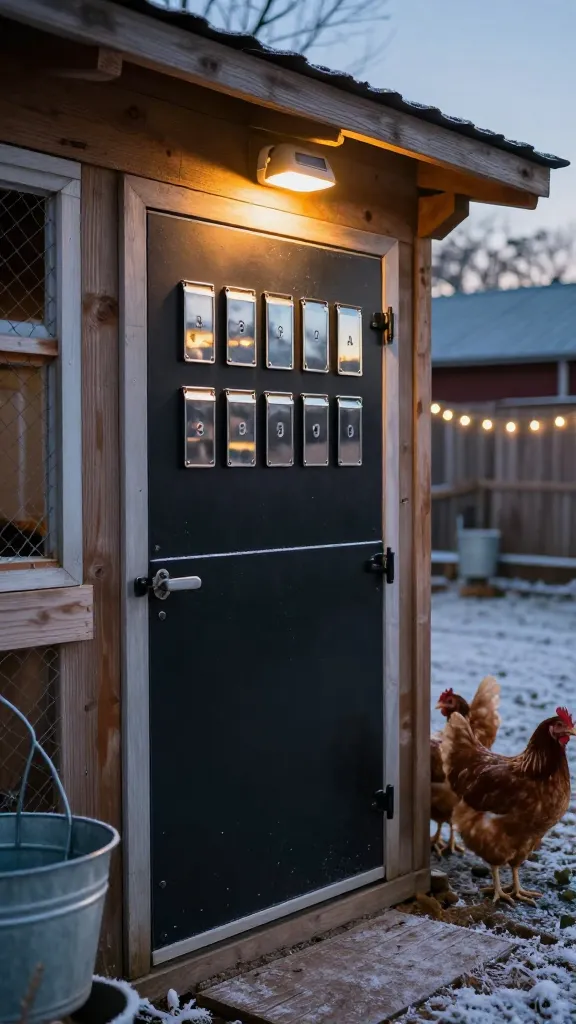
We do evening checks in winter when it’s dim by 5. I mounted a house number plaque backer ($12–$20) and swapped the digits for the coop name cut from reflective mailbox letters ($6–$10). A small solar puck light ($10–$18) aimed down from the eave made it readable without running power.
Lesson learned: reflective letters pop in car headlights but look gray at noon unless the background is dead matte. I repainted the backer flat black and the sign started working in all light. The first winter killed my bargain solar in 3 months; the second one is still on year 2 after I mounted it under the eave to avoid ice buildup.
Make it yours: in snow country, tilt the solar lens 10–15 degrees so it sheds. If you don’t want lights, use engineer-grade reflective letters—they cost about $2–$4 more per set but glow hard under headlights.
5. Reclaimed Pallet Slats, Burned and Brushed: Texture That Lasts on the Coop

I made a rustic set of pallet-slat signs for the run—one for feed, one for water—because I had a stack of slats I couldn’t justify tossing. Free wood, a propane torch I already owned, and a $9 wire brush. I burned the grain, brushed the softwood off, then hit the whole thing with exterior clear coat ($14–$20). Letters were white enamel by hand.
The look is great, the cost is low, and the finish is tough. The asterisk: pallet wood varies. My first “COOP” board split right through the O when the sun hit it at 2 p.m. because I didn’t pre-drill the corner screws. Round two with pre-drilled holes and stainless screws ($4) is a year in with no movement.
Make it yours: if you don’t want to torch, use a stain-and-wipe routine and dry-brush the letters. For a cleaner read, keep your letter thickness at least 3/4 inch stroke width.
6. Stencil Vinyl on Corrugated Plastic: The Rental-Friendly Option
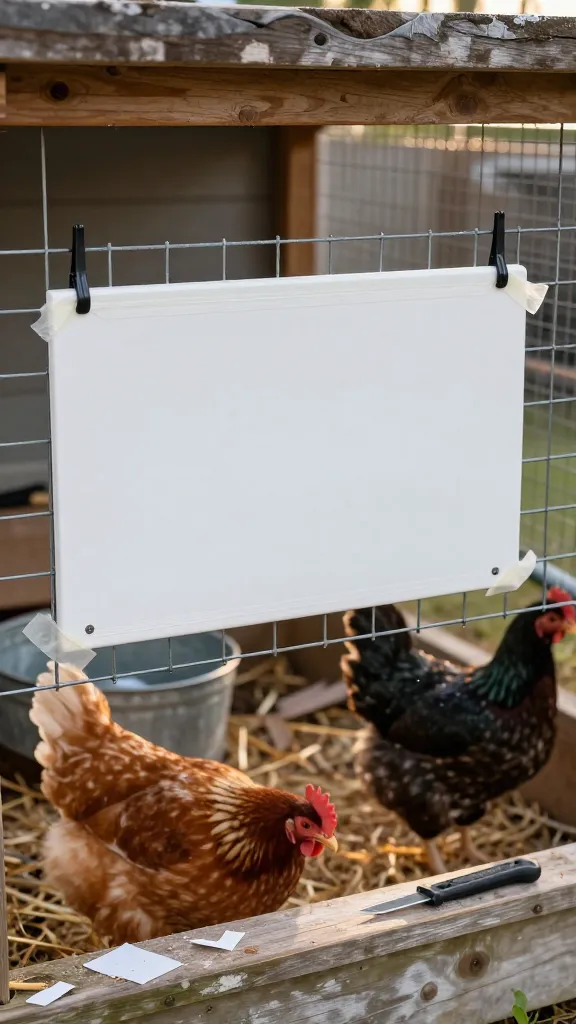
I needed a removable sign for a rental yard where screwing into the coop siding wasn’t allowed. Corrugated plastic from the craft aisle ($5–$8 for 18×24 inches) plus stencil vinyl ($6–$9) and two zip ties solved it. I wrapped the sign edge with clear packing tape to stiffen it and zip-tied it to the run panel wire.
It’s not heirloom, but it survived a full summer, including two hose blasts and a heat wave that curled a cheaper foam board in 2 hours. Painted with rattle-can enamel over a light sand, mine cost $11–$17 total. Expect some scuffing if it rubs the wire; I added two self-adhesive bumpers ($3) at the contact points and the wear stopped.
Make it yours: cut two and sandwich the wire panel if your birds peck anything new; leave a 1-inch gap so beaks don’t get stuck.
7. Routered Letters in a Pine Board: If You Want It Forever
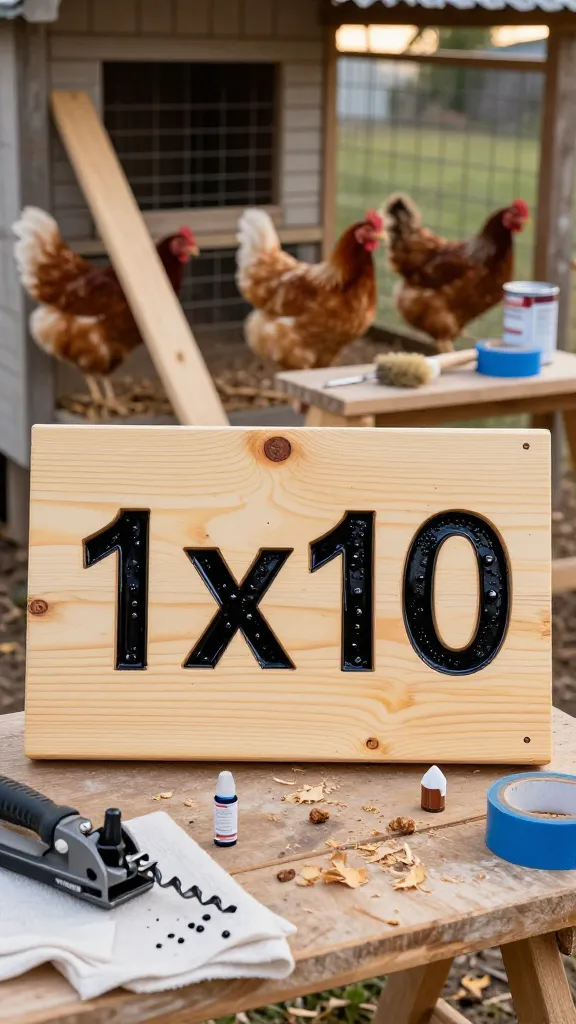
I wanted one sign that outlasted a dozen paint touch-ups. I borrowed a trim router and cut 1/4-inch-deep letters into a 1×10 pine board. Pine is cheap—my board was $11—but I learned to flood the letter cavities with exterior epoxy tinted black ($14–$20) before topcoating, or the grooves pool water. With two coats of spar urethane, the thing’s a tank.
The learning tax was real: I scorched the first board and snapped a bit, which added $8 and an afternoon I hadn’t planned on. That prototype still hangs inside the shed as a reminder. The final sign has gone 2 years with only a quick wipe each spring.
Make it yours: if you don’t own a router, a letter-carving template kit rental at a tool library or makerspace is often $5–$10/day. Or score the letters with a utility knife and paint the recess for a faux-carve look.
8. Farm-Gate Swing Sign on a Galvanized Coop Bracket: Reads From the Road
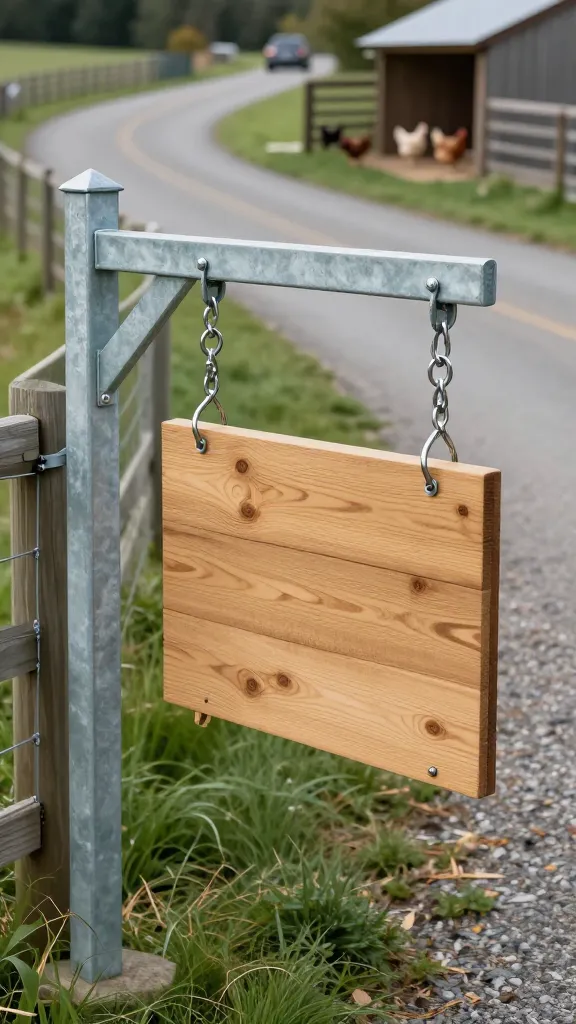
We have a curve in front of the house, and people slow down to see the birds. My fence-mounted sign was 20 feet off-axis, so drivers missed it. I set a galvanized hanging bracket on the gate post ($16–$24) and suspended a double-sided 10×20 board with stainless S-hooks ($4). The double-side matters: cars from both directions get a clean read.
Wind is the enemy. My first attempt used light chain and banged like a screen door in a storm. I swapped to short heavy links and added a hidden bottom tether—just thin wire to stop full swings. Paint was the same exterior enamel as item 1; letters were 6 inches tall block. From 60 feet, my neighbor could read it without her glasses.
Make it yours: if your road is dark, add a reflective border stripe. A single roll of reflective tape ($6–$9) will edge two signs.
9. Chalk-Paint Overcoat on Metal With Grease Pencil: Change the Name Without Repainting

I renamed the coop after we added a surprise rooster, and repainting felt silly. I coated a primed metal panel with chalk-style paint ($12–$18) but write with a grease pencil ($2–$4) instead of chalk. It looks like chalk from 10 feet, wipes with mineral spirits once a season, and doesn’t shed dust into the run.
Two things tripped me: on my first pass, I skipped the metal primer and the chalk coat skated off in sheets after the first freeze. Also, grease pencil melts in direct sun at 95°F. I now mount that sign under the eave on the north side, and it’s been steady for 14 months with one mid-summer rewrite.
Make it yours: if you live where summers bake, swap the grease pencil for an oil-based paint pen ($3–$6) and accept you’ll need mineral spirits to change it—still faster than a full repaint.
Frequently Asked Questions
What size letters should a chicken coop sign use to be readable from the road?
For a 30–60 foot read, use 4–6 inch block letters with a stroke width near 3/4 inch. High-contrast pairs like black/white or yellow/black beat anything “pretty.” At 80+ feet, push letters to 8 inches if you have the space.
Best fonts for a sign like this I can paint or stencil without a plotter?
Stick to simple: Impact, Helvetica Bold, or any thick sans-serif you can cut cleanly. Script looks sweet at arm’s length but turns to spaghetti at 25 feet unless it’s 6 inches tall and outlined. If you’re hand-painting, print your letters and use carbon paper to transfer them.
How do I weatherproof a chicken coop sign without fancy products?
Use exterior paint and seal end grain—that’s where water sneaks in. Two thin coats of spar urethane over paint outlast one thick one. On plywood, seal every cut edge twice; that’s what kept my hen cutout from delaminating after 2 winters.
Can I hang the sign on the coop door, or is that a bad idea?
You can, but mind weight and swing. Keep it under 3 pounds on a pop door so springs or pulleys aren’t fighting it. If it’s a people door, add lock washers or thread locker so vibrations don’t loosen your hardware over time.
What does a decent DIY sign like this actually cost?
My working range has been $11–$40, depending on materials on hand. The cedar plank with vinyl letters ran me about $24–$36; the corrugated plastic rental-friendly version was $11–$17. Going carved or metal typically lands in the $20–$45 zone with finish.
Name it, Paint it, Hang it
Pick a name tonight, print it in 6-inch block letters on regular paper, and tape it where you want the sign to live. If you can read it from the sidewalk without squinting, you’ve got your size—grab a board and a quart of exterior paint this weekend and you’ll be done in under 2 hours of hands-on time.
— ask me how I know.