9 Bantam Chicken Breeds for Small Yards and Small Coops
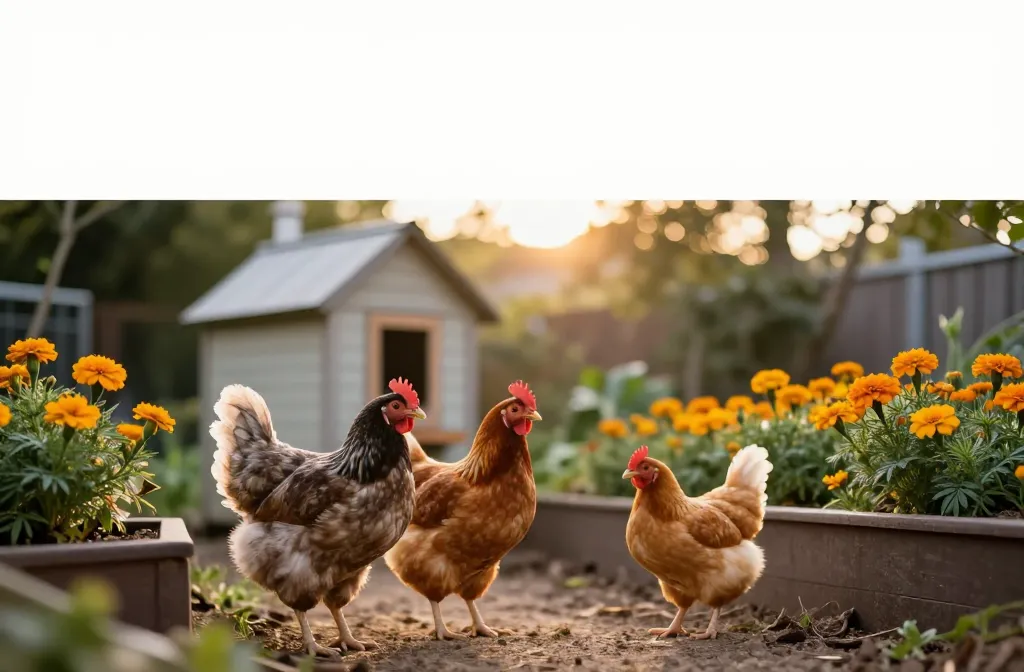
At dusk, a pint-sized hen threads through the marigolds like she owns the path, tucking herself into a coop the size of a garden bench. If you’re weighing bantam chicken breeds for small yards and small coops, this is the scale that makes urban flocks possible: less space, lighter footprints, still real chickens. By the end of this guide you’ll know which small bodies carry big personalities, who tolerates confinement, and what the downsized frame means for care, eggs, and flock dynamics. We’ll trade the internet gloss for the actual mechanisms — genetics, behavior, and the way “small” changes the day-to-day.
1. Silkies Can Barely See Through Their Own Crests — Does That Change How They Act?

Why do Silkies seem so calm and a little lost in the yard? Their fluffy crest and beard are modified feathers without firm barbicels, which reduces visual acuity and narrows their field of view. Combine that with a polydactyl foot and delicate skin, and you get a bird that orients more by touch and close-range cues than long-distance scanning. In practice, Silkies tend to stick to known paths and flockmates and handle confinement well, but they’re vulnerable to bullying by sharper-eyed breeds. Trim the crest around the eyes in 2-3 tiny snips if vision is clearly blocked, and offer a covered run — their soft feathers soak through faster than hard-feathered types.
2. Seramas Are the World’s Smallest — Are They Truly Indoors-Ready or Just Tiny?

Can a chicken be housepet-tiny and still be a chicken in its head? Seramas, bred in Malaysia for compact size and carriage, often weigh under 20 oz, with a vertical, “soldier” stance driven by selective musculoskeletal proportions rather than a different temperament class. They lay small eggs and have modest feed needs, which suits micro-coops, but the mechanism that matters most is surface area to volume ratio: small bodies lose heat faster. In a small yard, they thrive with a draft-free coop, dry litter, and access to a sun-warmed corner. They’re alert and can be bold; “delicate porcelain” is a myth, but cold snaps and aerial predators are real threats for a bird that light.
3. Bantam Cochins: a Feathered-Foot Breed That Means Grooming, Not Just Looks

Why do Cochin bantams track in half the garden after rain? Those extravagant leg and foot feathers wick moisture and debris by capillary action, which is gorgeous dry and a mud magnet wet. The feathers don’t make them clumsy, but they do hide nails and scales, so you can miss early scaly leg mites or overgrown claws. Plan for a wider, drier path to the run, and add a low roost (12-18 in) so heavy feathering doesn’t snag. A monthly foot check and a firm, dry dust-bath mix keep them cleaner than any bath will.
4. Old English Game Bantams Hold a Lot of History — Does That Mean They’re Feisty?

Are these tiny, upright birds too much heat for a small yard? Old English Game Bantams descend from game fowl, and the behavioral legacy you actually meet is a strong threshold for arousal: they escalate faster in resource disputes but also de-escalate cleanly once the decision is made. The mechanism is not “aggression” as a trait so much as clear signaling and persistence during rank negotiation. In practice, a stable group with enough perches and two feed points does fine; it’s forced proximity without escape routes that causes trouble. They’re excellent hawk spotters, and their muscular, efficient flight means they will use height if given it.
5. Bantam Wyandottes Lay Respectably — How Many Eggs Can You Expect in a Small Frame?

Does bantam size always mean toy-level egg output? Not with Wyandottes: the bantam version keeps the dual-purpose physiology scaled down, with robust ovaries and steady cycling under 14 hours of light. You won’t get large-breed totals, but you can see consistent laying across much of the year with a pause for a 6-12 week molt. Their rose comb tolerates frost better than a big single comb, and they handle coop life calmly. Give them 4-5 in of feeder space per bird to avoid shouldering at meals — Wyandottes are polite right up until feed priority is at stake.
6. Dutch Bantams Are True Bantams — Does “True” Change Care?

What’s different about a “true bantam” like the Dutch compared to a miniaturized standard? True bantams have no large counterpart; their proportions evolved or were selected at bantam scale, which often means finer bone, lighter muscle, and, in Dutch, a relatively big wing for body mass. That wing loading makes them agile fliers and escape artists — their bodies are built to clear a fence rather than ponder it. In a small yard, think netting or a covered run and vertical enrichment they can actually use. They’re gentle but not fragile; it’s airspace, not bubble wrap, that keeps a Dutch content.
7. Pekins (UK) / Cochin Bantams (US): a Lap-Bird Breed or Just Slower Movers?

Are Pekins snuggly, or do they just accept what they can’t outrun? Pekins are a true bantam in the UK sense, rounded and low with abundant fluff that damps quick acceleration; combine that with generations selected for docility and you get a bird that tolerates handling without chronic stress spikes. You see it in heart and respiratory rates dropping quickly after restraint compared to more reactive lines. In a small coop, they shine: quiet, routine-driven, and compatible with kids under supervision. That same fluff hides heat stress until late — panting and wings-out mean you’re late; give them shade, cool water, and airflow before they ask.
8. Sebright Bantams: All Show, No Muffs — Do Ornamental Lines Cope with Small Spaces?

Are Sebrights too ornamental to thrive in a small run? The laced feather pattern is a pigment boundary trick — melanin edged by eumelanin concentration — but the behavior underneath is standard chicken: active foragers with a quick startle reflex. They do fine in small yards if you supply complexity: perches at 2-3 heights, sight breaks, and multiple feeding points to distribute traffic. Hens lay lightly and often go long between clutches; if you want steady eggs, pick another bantam. Their tight feathering dries fast, a plus in damp climates where fluff breeds stay soggy.
I once watched a Sebright insist on taking the high roost over birds three times her mass; she didn’t win by force, she won by starting earlier and holding the spot without fuss.
9. Japanese Bantams Carry a Short-Leg Gene — What Does That Mean for Health?

Do those cartoon-short legs come with strings attached? The “creeper” phenotype in Japanese bantams is linked to a dominant short-leg allele; birds inheriting two copies don’t survive to hatch, which is why responsible breeders pair short- to normal-legged birds. The surviving short-legged birds can live normal lives, but the mechanics matter: reduced tibia length lowers clearance for keel and tail, so provide flat, low roosts and ramps to avoid chest bruising. They’re charming yard birds with a sweeping tail carriage, but they’re not jump-athletes; design the coop like accessibility is the goal, because it is.
Frequently Asked Questions
How many of these bantam breeds can I keep in a small coop and run?
Space guidelines scale, but not to zero. Aim for at least 2-3 sq ft per bantam inside the coop and 8-10 sq ft per bird in the run, more if you can. Vertical space counts: staggered perches and a shelf add usable territory. Two feed and two water stations reduce conflict in tight quarters.
Which bantam chicken breeds are best for kids and handling?
Pekins/Cochin bantams and Silkies are typically the most tolerant of handling, thanks to selection for docility and, in Silkies, reduced reactivity from limited vision. Wyandotte bantams can be calm once socialized. Always teach kids to approach low and slow, and let the bird step onto a hand rather than being scooped.
Do bantam chickens lay edible eggs, and how many per week?
Yes — just smaller. Expect 3-5 eggs per week from steady layers like bantam Wyandottes in season, fewer from ornamental lines like Sebrights. Egg size runs from quail-like up to around half a standard egg; recipes work fine by counting 2 bantam eggs as roughly 1 standard egg.
Are bantams quieter than full-size hens?
Volume is mostly about individual and context, not just size. Crowing in bantam roosters is just as frequent, but the pitch is higher and the carry can be less. Hens of calm breeds like Pekin or Silkie tend to keep a lower daily noise profile; any hen will call loudly for 10-60 seconds after laying.
Can bantams live with standard chickens in a mixed flock?
They can, but design it thoughtfully. Provide multiple perches, wide ramps, and at least two feeding zones so small birds aren’t body-checked away from resources. Avoid pairing very reactive, assertive standards with the most visually limited bantams; if you must, supervise introductions and be ready with partitions.
Small Birds, Full Lives
Once you’ve lived with bantams, you start to see how scale reshapes the day: who roosts early to secure a spot, who uses the shelf as a lookout, who needs a trim to widen their world by an inch. In a small yard, that attention is leverage — a low ramp here, a second feeder there, and the whole flock settles into a rhythm you can feel.
— keep watching. They’re never boring.