How the Pecking Order Actually Works (Not Bullying, a System)
Why Chickens Built a Hierarchy in the First Place
A pecking order is a dominance hierarchy — a stable ranking that reduces constant fighting over food, mates, and shelter. In a group-living ground bird with limited escape options, sorting disputes quickly saves energy and prevents injury, so once birds know “who yields to whom,” they stop testing every single time.
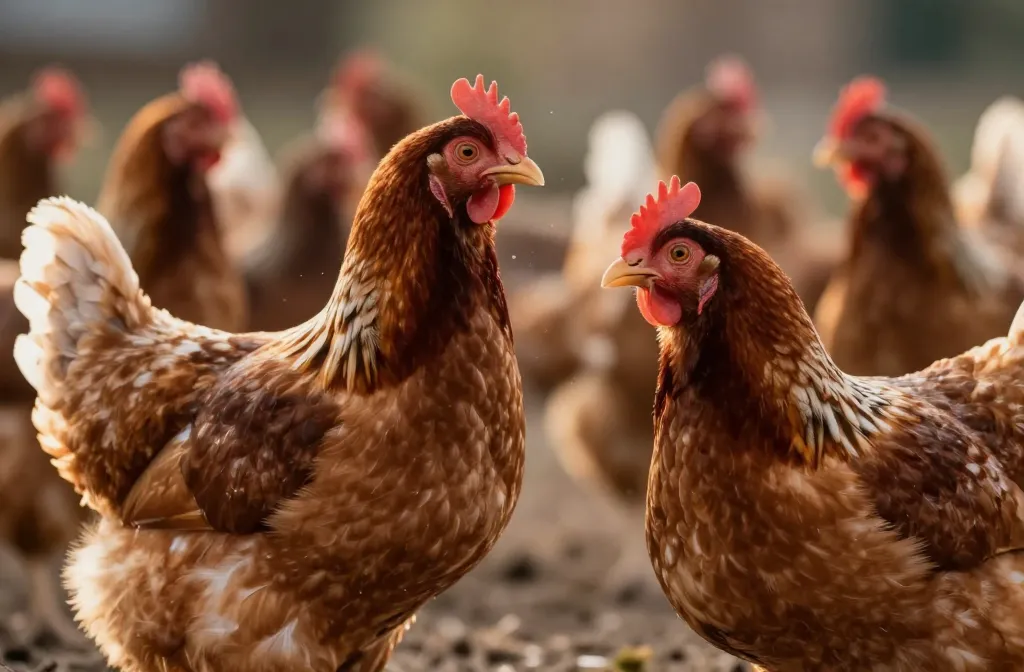
Two hens face off at the feeder: one freezes tall, the other turns her head sideways, eye hard, then steps back without a peck. That is the pecking order in motion — not brawling, but a quiet decision tree. The question is simple: why do chickens run a hierarchy at all, and how does that system keep a flock from tearing itself apart? This guide lays out the mechanics, when to let normal rank-setting play out, and when to step in. Expect subtle body language, a few sharp lessons, and a lot less chaos than it looks like at first glance.
A pecking order is a dominance hierarchy — a stable ranking that reduces constant fighting over food, mates, and shelter. In a group-living ground bird with limited escape options, sorting disputes quickly saves energy and prevents injury. Once birds know “who yields to whom,” they stop testing every single time. The result is fewer outright fights and more ritualized signals: posture, eye contact, blocking, and only occasional pecks to reinforce a decision. According to Chicken Whisperer Magazine, the term “pecking order” was coined in the 1920s by Norwegian zoologist Thorleif Schjelderup-Ebbe to describe this natural social system that determines access to resources like food, water and nesting spaces — and it minimizes conflict by establishing clear roles and reducing the need for constant competition.
The pressure to form ranks is strongest around resources that matter most: high-calorie feed, favored roost bars, prime nest boxes, and in mixed flocks, access to hens. Remove scarcity and you soften the stakes, but the structure persists because it is a coordination tool, not just a food line. Even in free-range settings with abundant forage, birds still track rank for quick conflict resolution.
How the Pecking Order Forms (and Re-forms) After Any Change
Hierarchy emerges through graded contests — a sequence from signals to brief scuffles to decisive moments. Most contests end before contact: the higher bird stands tall, hackles slightly lifted, neck elongated; the lower bird averts, crouches, or steps away — and any disruption triggers recalculation over 48–72 hours.
Hierarchy emerges through graded contests — a sequence from signals to brief scuffles to decisive moments. Most contests end before contact: the higher bird stands tall, hackles slightly lifted, neck elongated; the lower bird averts, crouches, or steps away. If neither yields, you see short chases, a peck or two, sometimes feather-pulling. Prolonged combat is rare in a well-matched flock with space to retreat.
Any disruption triggers recalculation. Adding or removing birds, puberty in cockerels, a top hen molting hard, or an illness that drops a bird’s vigor can all shuffle places. Expect 48–72 hours of testing after a change, occasionally a week. Patterns to watch:
- Newcomers start low. Even large newcomers yield until they learn the map.
- Existing subordinates rarely challenge; it is mid-rankers that opportunistically climb.
- A rooster does not erase the order; he overlays it, often policing disputes but not rewriting hen-to-hen ranks.
When it’s settled, interactions shorten. You’ll see more side-stepping and less sprinting. Feeding lines look calm. Roosting becomes predictable.
Signals, Not Just Pecks: Reading the Social Language
Because most hierarchy work is quiet, learning the signals pays off: high posture vs. crouch, blocking and shouldering, eye presentation, and peck with pause. At the roost, rank shows as who selects the safest central bars; in the nest boxes, higher hens “reserve” boxes by lingering or hovering nearby.
Because most hierarchy work is quiet, learning the signals pays off. Key displays:
- High posture vs. crouch: Tall body, neck extended, slight hackle raise communicates rank; a brief crouch or head-lower is submission.
- Blocking and shouldering: A higher bird steps sideways to occupy a path or feeder edge; the lower bird detours.
- Eye presentation: Turning the head to present one eye is assessment and mild threat; quick beak-flicks escalate it.
- Peck with pause: A single firm peck followed by stillness is a boundary marker. A flurry without pause is conflict, not just rank talk.
At the roost, rank shows as who selects the safest central bars and who gets bumped to ends or lower tiers. In the nest boxes, you’ll see higher hens “reserve” boxes by lingering or hovering nearby, and lower hens time their lay to avoid a scold.
Why It Looks Like Bullying (and When It Actually Is)
From the outside, a chase looks like cruelty — but for chickens, brief pursuit that ends in yield is the cleanest way to avoid worse injury. The system works when pressure stops as soon as the lower bird signals submission; it becomes bullying when one bird is targeted persistently, blocked from resources, or chased even when avoiding.
From the outside, a chase looks like cruelty. For chickens, brief pursuit that ends in yield is the cleanest way to avoid worse injury. The system works when pressure stops as soon as the lower bird signals submission and can access essentials elsewhere. But a functional hierarchy has limits you can measure:
- Duration: Short, punctuated interactions; not day-long harassment.
- Access: Subordinates can still eat, drink, and rest without running a gauntlet.
- Distribution of pecks: Corrections are occasional, not focused on one bird repeatedly.
It becomes bullying when one bird is targeted persistently, blocked from resources, shows weight loss or injuries, or is chased even when avoiding. That pattern means the “system” has failed its purpose of reducing harm.
Space, Design, and Feed: The Levers That Quiet a Flock
Housing either compresses conflict or diffuses it — aim for 4+ sq ft per bird in the coop, 10+ sq ft in the run, line-of-sight breaks, and multiple resource stations set far apart. Feed timing matters too: splitting ration access into morning and late afternoon top-offs evens the field and reduces gatekeeping.
Housing either compresses conflict or diffuses it. The best interventions are structural and boring — and they work. Aim for:
- Space: At least 4 sq ft per bird in the coop and 10+ sq ft per bird in the run; more for large or active breeds. Crowding magnifies every status contest.
- Line-of-sight breaks: Shrubs, panels, and perches at multiple heights let a lower bird exit the “attention cone” of a higher bird.
- Multiple resource stations: Two or three feeders and waterers set far apart (10–15 ft) prevent one high-rank hen from owning them all.
- Roost equity: Linear space of 8–10 in per bird, with at least two height levels, reduces bedtime shoving.
- Nest management: 1 box per 3–4 hens, plus a decoy pad or two; curtains or side shields reduce guarding behavior.
Feed timing matters. A single daily rush invites gatekeeping. Splitting ration access into morning and late afternoon top-offs evens the field, as does scattering a portion in a wide area to convert competition into foraging.
Introducing New Birds Without Meltdown
Integrations fail when strangers are forced into close quarters with no exit — use a staged process: see but no touch (7–14 days), shared space with added exits, resource duplication, and night roost last. Expect a few chases and pecks; intervene only when you see cornering with no escape, head-targeted pummeling, or blood.
Integrations fail when strangers are forced into close quarters with no exit. The fix is a staged process that lets the hierarchy compute without blood:
- See but no touch (7–14 days): Adjacent penning or a safe crate inside the run lets both sides learn faces and signals.
- Shared space, added exits: First mingling in a large area with extra perches and hides. Choose a calm, bright part of the day, not roost time.
- Resource duplication: Double feeders/waterers at distance. Add a low, wide tray for scatter feed to occupy beaks.
- Night roost last: Allow co-roosting only after daytime skirmishes shorten and newcomers can approach feed without being run off.
Expect a few chases and pecks. Intervene only when you see cornering with no escape, head-targeted pummeling that continues after submission, or blood. Separating a persistently aggressive individual for 48 hours can break momentum and lower their status on return — a reset that sometimes settles the map.
Roosters and the Pecking Order: Referee, Participant, or Problem?
A mature rooster usually sits above hens in rank and can police disputes by stepping between birds, issuing tidbitting calls, or shouldering a bully off a subordinate. Good roosters reduce hen-on-hen aggression; adolescent cockerels are volatile and may harass specific hens while their hormones outrun their judgment.
A mature rooster usually sits above hens in rank and can police disputes by stepping between birds, issuing tidbitting calls to redirect, or shouldering a bully off a subordinate. Good roosters reduce hen-on-hen aggression and keep order at feed and roost. Adolescent cockerels, however, are volatile; they test everything, often over-mate, and may harass specific hens while their hormones outrun their judgment.
If you keep a rooster, choose for temperament as much as type. Signs of a stabilizing male: he calls hens to feed, breaks up squabbles, and does not pursue a hen that is clearly refusing. Signs he is amplifying conflict: frequent forced mating, chasing even outside breeding contexts, or guarding resources from hens. In multi-rooster setups, space and sight breaks are nonnegotiable; aim for larger ranges or distinct sub-areas, or keep fewer males.
When the System Goes Wrong: Illness, Injury, and Mismatch
Health changes ripple through rank — a hen in a hard molt or fighting an infection may drop status overnight, and others may peck at new skin or scabs. Isolate for wounds, address root causes like parasites or pain, and manage breed/age mismatches by size cohorts until youngsters are near adult size.
Health changes ripple through rank. A hen in a hard molt or fighting an infection may drop status overnight; others may peck at new skin or scabs. That is not malice — bright tissue and odd posture are triggers — but it can escalate to serious damage.
- Isolate for wounds: Any bleeding spot should be covered or the bird placed in a hospital crate until scabbed, then reintroduced with supervision.
- Address root causes: Parasites, pain, or nutritional deficits increase irritability and vulnerability. Chronic aggression warrants a health check for both aggressor and target.
- Breed and age mismatch: Heavy, assertive birds can overwhelm small, docile breeds; adult hens can terrorize juveniles. Manage by size/age cohorts until youngsters are near adult size.
If one individual fixates on tormenting another despite good space and design, permanent separation or rehoming is sometimes the kindest option. A stable flock is more humane than a principled stand on keeping everyone together at any cost.
What You Should and Shouldn’t Do During Rank-Setting
It is tempting to referee every squabble, but that can backfire by prolonging uncertainty — better is targeted support: add space, breaks, and duplicate resources; supervise early integrations; give adolescents time to mature. Don’t hold the lowest bird constantly or punish single corrective pecks — you’ll suppress communication, not aggression.
It is tempting to referee every squabble. That can backfire by prolonging uncertainty — birds re-test when you remove feedback. Better is targeted support:
- Do: Add space, breaks, and duplicate resources; supervise early integrations; remove and treat injuries; give adolescents time to mature.
- Do: Pen a chronic aggressor for 1–2 days to deflate momentum if needed; return during a busy, well-fed time.
- Don’t: Hold the lowest bird constantly; she needs to learn the routes and timings that work for her.
- Don’t: Punish single corrective pecks; you’ll suppress communication, not aggression.
One dry aside: the top hen is rarely the loudest — she is the bird that never needs to raise her voice.
Frequently Asked Questions
How long does it take for the pecking order to settle after adding new chickens?
Most flocks calm within 48–72 hours, with some mild testing for up to a week. If chasing and blocking persist beyond that and a newcomer cannot eat without being driven off, add a second feeder and more sight breaks and reassess integration timing.
What’s normal pecking versus bullying in a pecking order?
Normal is a few brief pecks or chases that stop as soon as the lower bird yields, with all birds still accessing food, water, and roosts. Bullying is repeated, focused harassment, visible weight loss or wounds, or guarding that denies essentials — intervene and separate the target to recover, then adjust housing.
Do roosters improve or worsen the pecking order?
A steady, mature rooster often reduces hen-on-hen fights by policing disputes and redirecting attention. An adolescent or human-aggressive male can amplify conflict; if behavior does not improve with maturity and management, consider keeping a different rooster or none at all.
Can too little space cause a bad pecking order?
Yes. Crowding magnifies every interaction and removes retreat options, turning quick corrections into prolonged fights. Provide at least 4 sq ft per bird in the coop, 10+ sq ft per bird in the run, multiple feeders/waterers, and line-of-sight breaks.
Why do chickens still peck when there’s plenty of food?
Hierarchy isn’t only about food; it’s a general conflict-shortening system. Even with abundance, birds signal and occasionally peck to maintain rank around roosts, nest boxes, and preferred spaces, but the intensity should be low and brief.
Quick Comparison: Normal Rank-Setting vs. Bullying
| Behavior | Normal Pecking Order | Bullying (Intervene) |
| Duration | Short, punctuated interactions | Day-long harassment |
| Access to resources | Subordinates can eat, drink, rest | Target blocked from essentials |
| Peck distribution | Occasional corrections spread around | Focused repeatedly on one bird |
| After submission | Pressure stops immediately | Chasing continues after yield |
| Physical condition | All birds maintain weight and health | Visible weight loss or injuries |
| Integration timeline | 48–72 hours of testing, then calm | Persistent chasing beyond 1 week |
| Roost behavior | Predictable positions, minimal shoving | Target chased off roost repeatedly |
Start Noticing the Conversations
Watch for the tall-then-yield dance at the feeder and the quiet blocking on the ramp — those are decisions being made without a fight. You will start to map who moves whom, when, and why, and you’ll fix problems by rearranging the room rather than scolding the birds. That is the keeper’s job: understand the system, then make it easier for them to use well. For understanding how different breeds fit into flock dynamics, the Silkie breed guide explains why gentle breeds often sit lower in the order. If you’re weighing cold-hardy breeds for your flock, the cold-hardy breeds comparison covers temperament and production. And when you’re ready to think about predator pressure that can disrupt flock stability, the predator-proofing checklist covers every weak point you might have missed.
— keep watching. They’re never boring.