Do Backyard Chickens Attract Rats? (prevention guide)
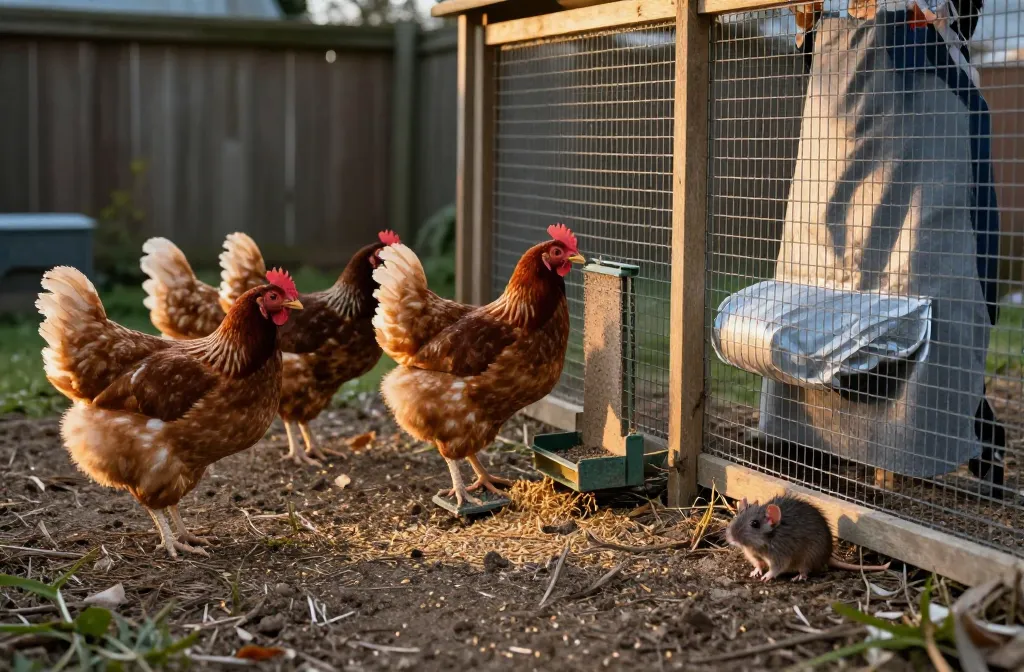
How Rat Problems Actually Start Around Chickens
The standard is simple: no open food, no water left out overnight, no harborage. Most infestations start with a gravity feeder that dribbles fines, a wide-lip dish that collects scatter, or a dirt-floor coop with a cozy gap under the sill plate. Rats need about 1 ounce of food per day, can collapse their bodies to fit through a 1/2-inch gap, and travel 50–150 feet from a nest to feed. If you give them a steady buffet for two weeks, they’ll establish runs and you’ll be playing catch-up.
Backyard chickens can attract rats if feed and shelter are easy, but they do not have to. Rats come for spilled grain, open feed, and warm gaps under coops — remove those and they move on. I learned this the hard way in my second year, when a loose feeder and a sagging apron turned into a midnight rat parade. By the end of this guide you’ll have a rat-proof routine, hard numbers for feed and gaps, and a coop setup that denies food, water, and shelter from every angle.
Feed Management: The Core of Backyard Chickens and Rats
The standard: feed should be contained, elevated, and inaccessible at night — use a treadle feeder with a counterweighted lid or a rat-proof, gravity-fed tube with a 1-inch wide, 6-inch long port that sits 8–10 inches above the floor so hens reach comfortably but rodents struggle; bring all loose feed in at dusk, every day. I switched to a treadle feeder a decade ago and stopped seeing feed loss measured in cups; spills dropped to a tablespoon a day.
The standard: feed should be contained, elevated, and inaccessible at night. Use a treadle feeder with a counterweighted lid or a rat-proof, gravity-fed tube with a 1-inch wide, 6-inch long port that sits 8–10 inches above the floor so hens reach comfortably but rodents struggle. Bring all loose feed in at dusk, every day. I switched to a treadle feeder a decade ago and stopped seeing feed loss measured in cups; spills dropped to a tablespoon a day.
According to ChickenGuard, investing in a rodent proof chicken feeder like a treadle feeder prevents rat problems from starting since chicken feed is the primary reason rats are attracted to areas with chickens. They also recommend keeping all bulk feed securely stored away from the coop so spillages don’t leave food in the open.
What to Use and How
Inside the coop or a covered run, mount the feeder on a 2×4 cleat or hang it so the bottom sits 8–10 inches off the ground. Fit a 3/4-inch lip on any open tray to reduce bill-sweep. Keep only 24 hours of feed accessible — for six standard hens that’s roughly 2 pounds per day. Store the rest in a metal lidded can with a tight-fitting lid; plastic totes are chew toys.
Water Without the Mess
Rats will drink nightly if you leave pans out. Swap open bowls for a horizontal nipple waterer on a sealed bucket mounted 12–18 inches high. Dump any open catch cups at dusk and wipe drips under the waterer weekly to deny a free drink.
Coop and Run Construction That Denies Entry
The standard: the coop must be a sealed box on all faces, the run must be wrapped and skirted — skin every vent, window, and gap with 1/2-inch hardware cloth (19-gauge or heavier), not poultry netting; overlap seams by 2 inches and fasten every 4 inches with screws and fender washers; staples alone loosen in a season.
The standard: the coop must be a sealed box on all faces, the run must be wrapped and skirted. Skin every vent, window, and gap with 1/2-inch hardware cloth (19-gauge or heavier), not poultry netting. Overlap seams by 2 inches and fasten every 4 inches with screws and fender washers; staples alone loosen in a season.
According to Imaginacres, most rats can squeeze through a space as small as a quarter, so you need to be thorough as you search for holes and cover even the small ones in hardware cloth, or stuff them with steel wool. They recommend using 1/4-inch galvanized hardware cloth for anything that needs to be rodent-proofed because it’s tough, chew-resistant, and lasts a long time.
Floor, Perimeter, and Skirt
A solid floor is best. Use 3/4-inch exterior plywood or a concrete paver floor over compacted base, and seal edges with polyurethane caulk. If you have a dirt floor, line it with hardware cloth brought up the walls at least 12 inches and covered with 3–4 inches of compacted fines or pavers. Around the run, install an anti-dig apron: a hardware cloth skirt 18–24 inches wide, laid flat and stapled to the base, then buried under 2 inches of soil or gravel.
Doors, Latches, and Gaps
Doors should shut against a continuous stop on three sides with 1/8-inch or less gap. Use two locking hasps or a hasp plus a spring-loaded barrel bolt, both drilled for a carabiner or padlock. Seal cracks larger than 1/4 inch with wood strips and exterior screws; rats exploit a 1/2-inch opening, and they’ll chew a 1/4-inch one bigger by week’s end.
Run Cleanliness: Bedding, Scraps, and Routine
The standard: zero overnight attractants — skip kitchen-scrap scatter in the run; if you offer treats, give a measured portion no more than 10% of daily intake in a dish at midday and remove leftovers by dusk; rake or stir litter weekly and fully muck out the run every 6–8 weeks in wet seasons, every 8–12 weeks in dry; bag and remove spilled feed and soiled bedding; do not compost it against the coop wall.
The standard: zero overnight attractants. Skip kitchen-scrap scatter in the run; if you offer treats, give a measured portion — no more than 10% of daily intake — in a dish at midday and remove leftovers by dusk. Rake or stir litter weekly and fully muck out the run every 6–8 weeks in wet seasons, every 8–12 weeks in dry. Bag and remove spilled feed and soiled bedding; do not compost it against the coop wall.
Bedding Choices That Don’t Feed Pests
Use coarse, dry carbon: large-flake pine shavings in the coop at 3–4 inches, or washed contractor’s sand at 2 inches in arid climates. Avoid fine crumble that hides feed dust. If you run deep litter, commit to true carbon balance and weekly fork-turning; a sour, damp layer is rodent housing with a roof.
Landscape and Property Edges: Remove Harborage
The standard: keep a 3-foot clear zone around the coop and run — trim vegetation up to 6 inches off the ground, stack firewood at least 20 feet away on a raised rack, and store tools and buckets off soil; seal outbuildings with 1/4-inch hardware cloth over vents and set door sweeps to within 1/8 inch of the threshold; if your compost is nearby, use a rodent-resistant bin with a sealed lid and add material in 2–3 inch layers to generate heat.
The standard: keep a 3-foot clear zone around the coop and run. Trim vegetation up to 6 inches off the ground, stack firewood at least 20 feet away on a raised rack, and store tools and buckets off soil. Seal outbuildings with 1/4-inch hardware cloth over vents and set door sweeps to within 1/8 inch of the threshold. If your compost is nearby, use a rodent-resistant bin with a sealed lid and add material in 2–3 inch layers to generate heat; a hot pile (130–150°F) is less interesting to nest in.
Monitoring: Know Early, Act Fast
The standard: inspect weekly and log signs — look for droppings (1/4–1/2 inch, blunt ends), gnaw marks on wood, new holes (2 inches wide) near foundations, and narrow, greasy runways along walls; dust a 1-inch wide, 24-inch long flour strip at dusk near suspect paths and check for tracks at dawn; one track night means you tighten feed, water, and seal points the same day.
The standard: inspect weekly and log signs. Look for droppings (1/4–1/2 inch, blunt ends), gnaw marks on wood, new holes (2 inches wide) near foundations, and narrow, greasy runways along walls. Dust a 1-inch wide, 24-inch long flour strip at dusk near suspect paths; check for tracks at dawn. One track night means you tighten feed, water, and seal points the same day.
Trapping Protocol That Works
If you confirm rats, set traps immediately and remove attractants the same hour. Use snap traps in protective boxes with 1.25-inch entry holes to exclude hens; anchor the trap to the box base. Place traps perpendicular to walls with the trigger toward the wall, every 8–10 feet along runs. Pre-bait unset for 24–48 hours, then set and check at first light. Continue for 7 consecutive empty days before standing down. Do not use poison in or near a coop: secondary poisoning and carcass risk are real for your birds and neighborhood wildlife.
Seasonal Pressure: When Backyard Chickens and Rats Collide Most
Expect pressure to spike in late summer and the first hard cold — in harvest months, tighten feed storage and run a mid-season caulk-and-screw check; before the first freeze (32°F), switch all open waterers to sealed nipple systems and double-check your skirt and door gaps; rats relocate when outdoor water locks up.
Expect pressure to spike in late summer and the first hard cold. In harvest months, tighten feed storage and run a mid-season caulk-and-screw check. Before the first freeze (32°F), switch all open waterers to sealed nipple systems and double-check your skirt and door gaps; rats relocate when outdoor water locks up.
Common Mistakes That Invite Rats
Leaving a pan of pellets out “just for tonight” is enough to feed a family of four rats for two days; using chicken wire instead of hardware cloth; storing feed in plastic bins; deep, undisturbed bedding that stays damp; lids left open on compost or trash with a 1-inch gap — these are the mistakes that cost you a rat-free coop.
- Leaving a pan of pellets out “just for tonight” — that’s enough to feed a family of four rats for two days.
- Using chicken wire instead of hardware cloth; chicken wire keeps hens in, not predators or rodents out.
- Storing feed in plastic bins; teeth go through in minutes. Use steel cans with tight lids.
- Deep, undisturbed bedding that stays damp; anything you don’t turn weekly is a mattress and a wall.
- Lids left open on compost or trash; a 1-inch gap is an open door.
My One Firm Opinion
You can skimp on cute accessories; you cannot skimp on 1/2-inch hardware cloth and a real treadle or sealed-port feeder.
You can skimp on cute accessories; you cannot skimp on 1/2-inch hardware cloth and a real treadle or sealed-port feeder.
Audit Checklist You Can Walk Tonight
A systematic walkthrough covers: collect all feed at dusk and confirm no open pans remain; check every opening and seal or screen any gap over 1/4 inch with 1/2-inch hardware cloth; verify a hardware cloth skirt at least 18 inches wide fully attached and buried; swap open water for a horizontal nipple waterer and dump any catch cups; clear a 3-foot vegetation-free perimeter and raise anything stored on soil; set two snap traps in boxes along suspected runs and pre-bait overnight.
- Collect all feed at dusk; confirm no open pans remain.
- Check every opening; any gap over 1/4 inch gets sealed or screened with 1/2-inch hardware cloth.
- Verify a hardware cloth skirt at least 18 inches wide, fully attached and buried.
- Swap open water for a horizontal nipple waterer; dump any catch cups.
- Clear a 3-foot vegetation-free perimeter; raise anything stored on soil.
- Set two snap traps in boxes along suspected runs and pre-bait overnight.
Frequently Asked Questions
Do backyard chickens attract rats more than other pets?
They can if feed is loose; spilled grain is an easy calorie source. A treadle or sealed-port feeder, water removed overnight, and a 3-foot clear perimeter reduce attraction to near zero.
How do I rat-proof a chicken coop quickly?
In one afternoon: skin all vents and openings with 1/2-inch hardware cloth, install an 18–24 inch anti-dig skirt, elevate and close your feeder at night, and switch to a nipple waterer. Seal door gaps over 1/4 inch and store feed in a metal can. Set snap traps in boxes the same evening and check at dawn.
Will hardware cloth stop rats in the chicken run?
Yes — 1/2-inch, 19-gauge or heavier hardware cloth on walls and an 18–24 inch skirt defeats entry and tunneling. Overlap seams by 2 inches and fasten every 4 inches. Chicken wire is not enough anywhere you expect pressure.
What food practices keep rats away from backyard chickens?
Feed only what your flock eats in 24 hours — about 1/3 pound per standard hen — in a treadle or sealed-port feeder mounted 8–10 inches high. No kitchen scraps left after dusk, and no open water overnight. Sweep or rake under feeders weekly and after any spill larger than a tablespoon.
Do backyard chickens in winter attract more rats?
Pressure often increases after the first freeze when wild water sources lock up. Remove open water overnight, check for new gnaw points weekly, and confirm your skirt is intact and not heaved; add 2 inches of gravel over exposed sections. Keep feed storage indoors in a metal can with a tight lid.
Are bait stations safe to use around a chicken coop?
Use caution. Enclosed bait stations reduce non-target access, but anticoagulant poisons create secondary poisoning risks for hens and wildlife. Prefer snap traps in boxes and exclusion first; if pressure persists, consult your local extension or a licensed professional for a targeted plan.
Quick Comparison: Rat Prevention Methods
| Method | Specification | Installation | Effectiveness |
| Treadle feeder | Counterweighted lid, 8–10 inches high | Mount on cleat or hang, train hens 1–2 weeks | Very high — eliminates overnight feed access |
| Hardware cloth (1/2-inch) | 19-gauge or heavier, overlapped 2 inches | Fasten every 4 inches with screws and washers | Very high — blocks entry and tunneling |
| Nipple waterer | Horizontal nipples on sealed bucket, 12–18 inches high | Mount on wall or stand, dump catch cups at dusk | High — eliminates open water sources |
| Metal feed storage | Steel can with tight-fitting lid | Store away from coop, seal all spillage | Very high — rats cannot chew through steel |
| Anti-dig skirt (18–24 inches) | Hardware cloth laid flat, buried 2 inches | Staple to base, cover with soil or gravel | Very high — stops tunneling under fences |
| Snap traps in boxes | 1.25-inch entry holes, perpendicular to walls | Place every 8–10 feet, pre-bait 24–48 hours | High — safe for hens, effective for rats |
Do This Before Bed
The standard is strict containment: sealed feed, sealed water, sealed coop. Tonight, bring in the feed, dump any open water, and walk the perimeter with a flashlight and a handful of screws and washers — screen one gap and you’ve already changed tomorrow morning. For the full predator-proofing checklist that covers all threat types including rats, the predator-proof checklist walks through every weak point. For the hardware cloth specs and installation details, the hardware cloth guide explains the differences. And for stopping diggers who tunnel under fences, the predator apron guide shows exactly how to build a perimeter defense.